

How to Mix Outdoor Furniture Materials for a Beautiful Patio
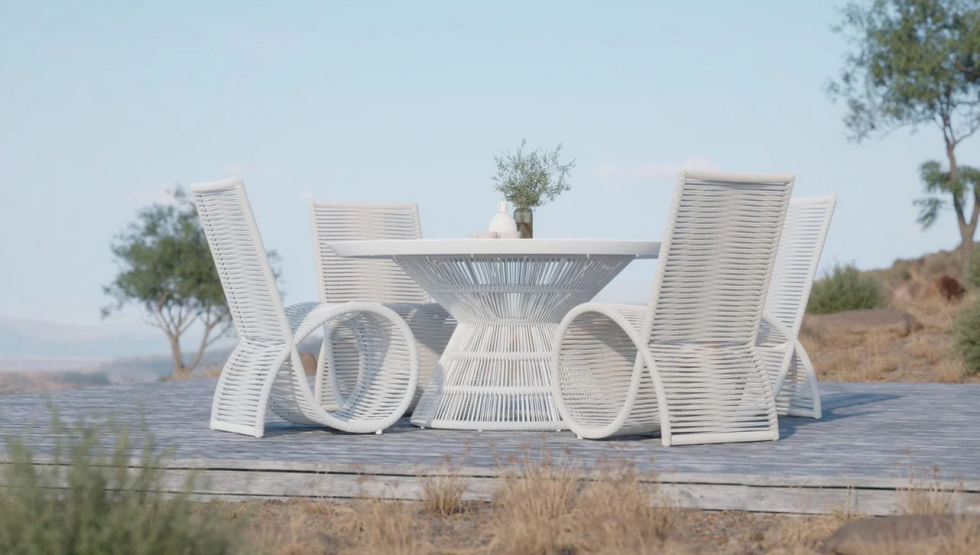
As spring and summer approach, one question always comes up when planning an outdoor space:
What is the best material for outdoor furniture?
Here’s a little design secret: there isn’t just one perfect material. Matching patio sets can feel predictable (much like matching living room or bedroom sets). Mixing outdoor furniture materials like wood, rope, metal, wicker, and concrete creates the layered, collected look designers use to make outdoor spaces feel curated rather than catalog-perfect.
The most beautiful outdoor spaces combine materials to create contrast, texture, and visual interest. Designers rarely stick to just one material. Mixing outdoor furniture materials like teak, wicker, aluminum, concrete, all weather rope and HDPE creates patios that feel layered, balanced, and thoughtfully designed.
If you’re designing a patio, deck, or backyard lounge area, learning how to mix materials will instantly elevate your outdoor space.
Before choosing furniture, it helps to consider a few important elements that already exist in your outdoor environment.
Key Things to Consider When Designing an Outdoor Space
Permanent Fixtures
Start by looking at the features that are unlikely to change in your outdoor space. These elements should help guide your furniture choices.
Examples include:
House siding
Shutters
Outdoor fireplaces
Fences
Decking or patio flooring
Pergolas or covered ceilings
Outdoor furniture should complement these permanent features rather than compete with them.
The Natural Setting
Your surroundings play a big role in outdoor design. Consider the natural elements around your home such as:
Trees and plants
Amount of sunlight
Landscaping style
Natural surroundings (coastal, wooded, rural, suburban)
Great outdoor spaces highlight the surrounding landscape and work with nature rather than overpowering it.
Color Palette
Neutral furniture tends to work best outdoors because it allows the natural surroundings to shine.
You can then introduce color through accessories like:
Outdoor pillows
Planters
Throws
Decorative accents
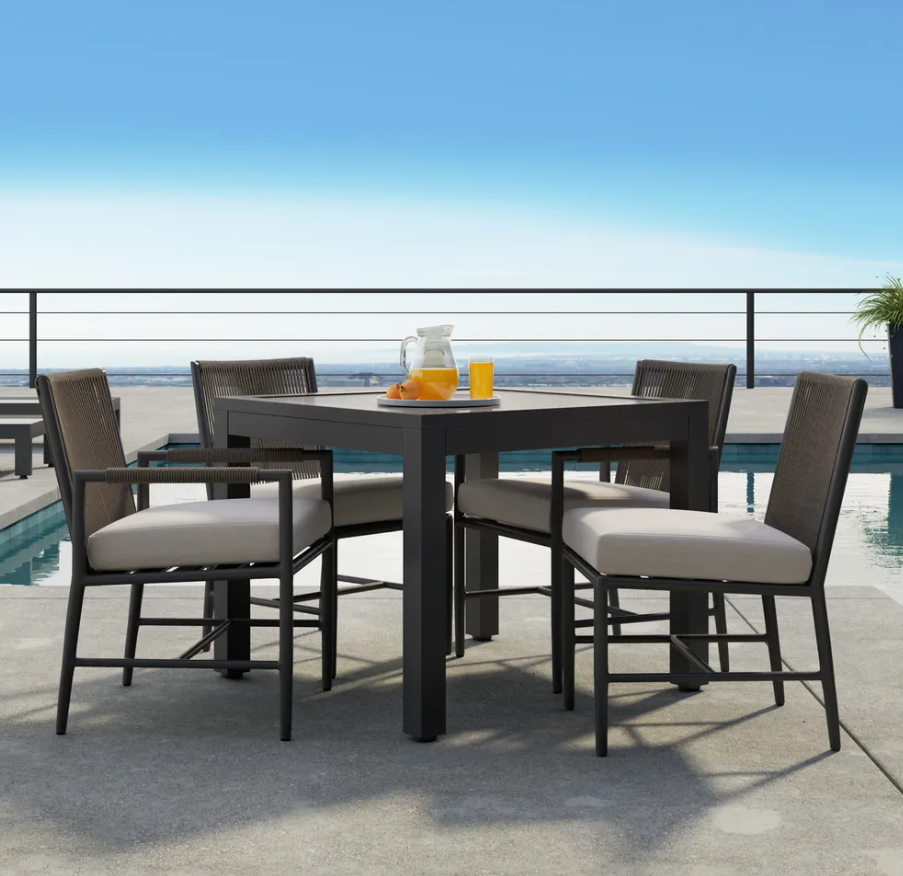
All for Aluminum – Aluminum Outdoor Furniture
When many people think of aluminum outdoor furniture, they picture simple black metal frames. While that classic look is still popular, aluminum is far more versatile than most people realize.
Aluminum furniture can be:
Powder coated in a variety of colors
Cast into organic or geometric shapes
Textured to resemble wood or hammered metal
Even traditional black aluminum frames have their place in outdoor design. They create bold contrast against greenery and add clean structure to softer natural elements.
Because aluminum is lightweight yet durable, it’s a great material for introducing modern lines and sculptural shapes into an outdoor setting.
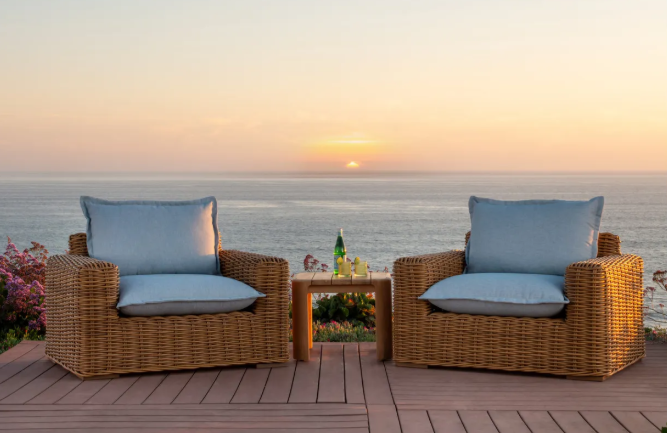
What About Wicker? Wicker Outdoor Furniture
Wicker remains one of the most popular outdoor furniture materials because it’s incredibly versatile in shape, color, and pattern. Many people think wicker is a material, but it’s actually a method of weaving. Traditionally, wicker furniture is made from natural plant fibers like rattan, willow, or bamboo. Today, some modern pieces use rope, jute, or synthetic fibers, but classic wicker relies on rigid, natural materials.
Outdoor wicker furniture may be made from:
Resin wicker (most weather resistant)
Rattan
Bamboo
Polyethylene
Rope
One of wicker’s defining characteristics is the woven pattern, which creates visual texture and softness. Different weaving techniques can produce distinctive styles such as bird nest or brindle patterns.
Because of its texture and warmth, wicker is a beautiful way to introduce pattern and depth into an outdoor seating area.
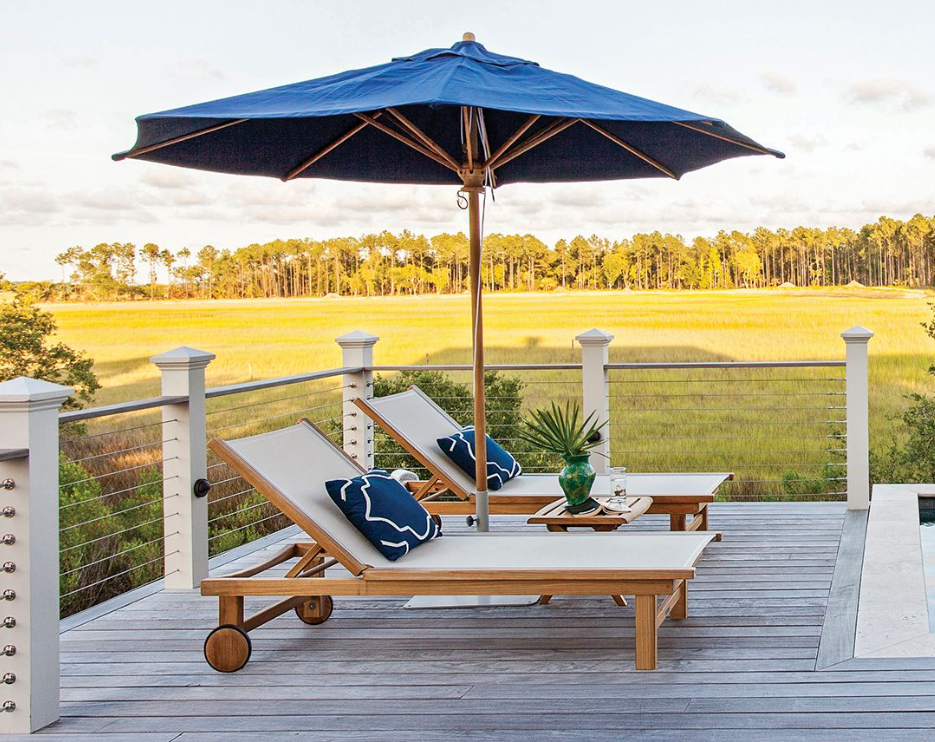
Let’s Talk Teak – Teak Outdoor Furniture
It’s hard to go wrong with wood in an outdoor space, and teak is one of the most popular materials used for outdoor furniture.
Teak is valued for both its durability and its warm honey-amber tone, which creates a relaxed and inviting atmosphere.
Over time, teak ages naturally and develops a soft, silvery-gray patina. Many homeowners love this weathered look because it gives outdoor spaces a relaxed, coastal feel.
Because teak sits somewhere between rustic and refined, it pairs beautifully with many other outdoor materials and adds natural warmth to a space.
Calling for Concrete – Concrete Outdoor Furniture
Concrete furniture has become increasingly popular because it brings a bold architectural element to outdoor spaces.
Unlike softer materials, concrete emphasizes form and structure. It can be molded into many shapes and often becomes the sculptural centerpiece of a patio or seating area.
Many modern outdoor pieces are made using glass-reinforced concrete (GRC), a newer version of concrete that is stronger and lighter than traditional poured concrete. Tiny glass fibers are mixed into the material, helping reinforce it so the furniture can be thinner, more durable, and less prone to cracking.
Because of this, designers can create concrete tables and seating with more refined shapes while still keeping that solid, architectural look.
Concrete surfaces may be:
Smooth and minimalist
Slightly textured or hand-finished
Finished with terrazzo for added visual interest
Its natural neutral tones help highlight surrounding greenery and landscaping while adding modern design appeal.
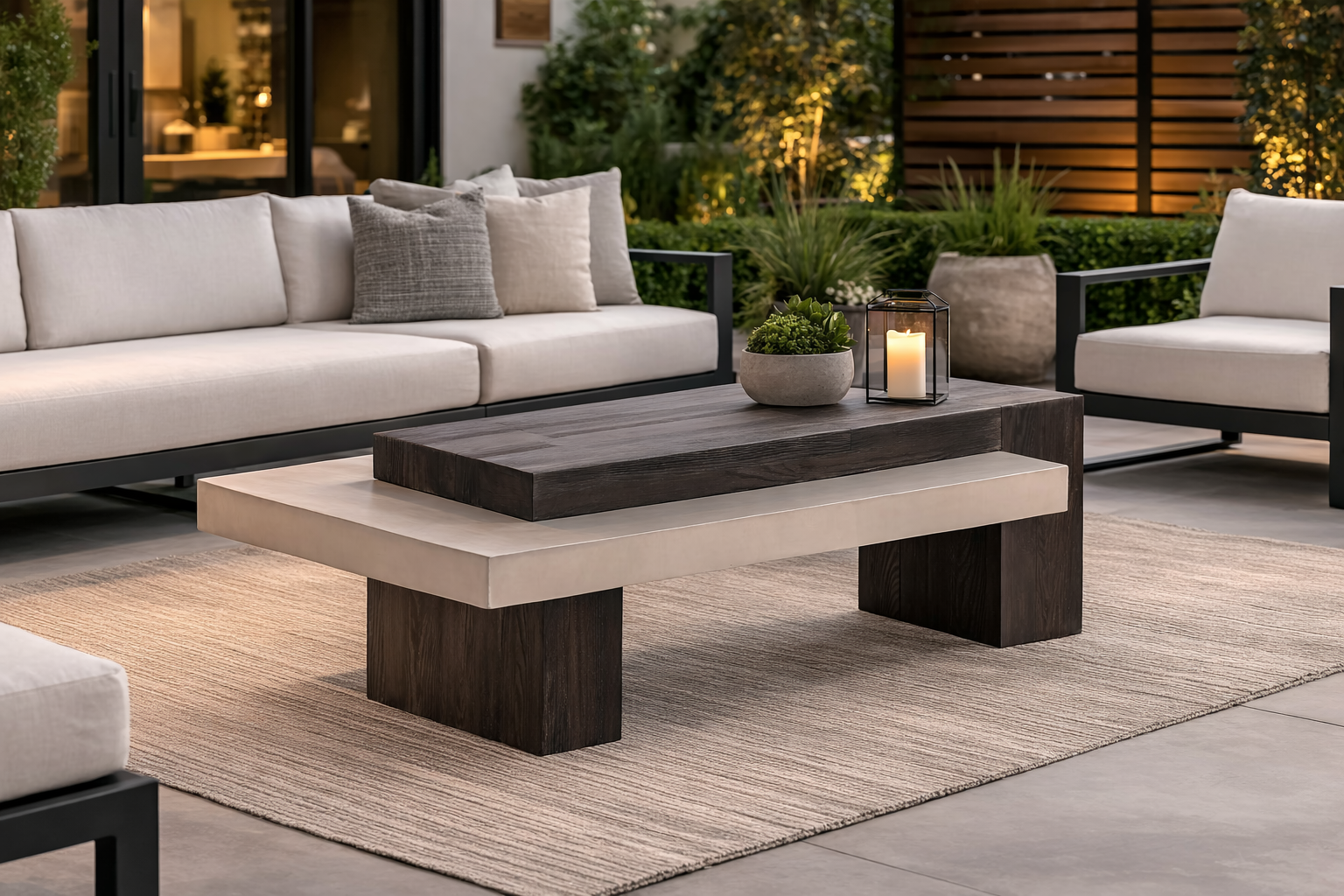
Happening with HDPE – HDPE Outdoor Furniture
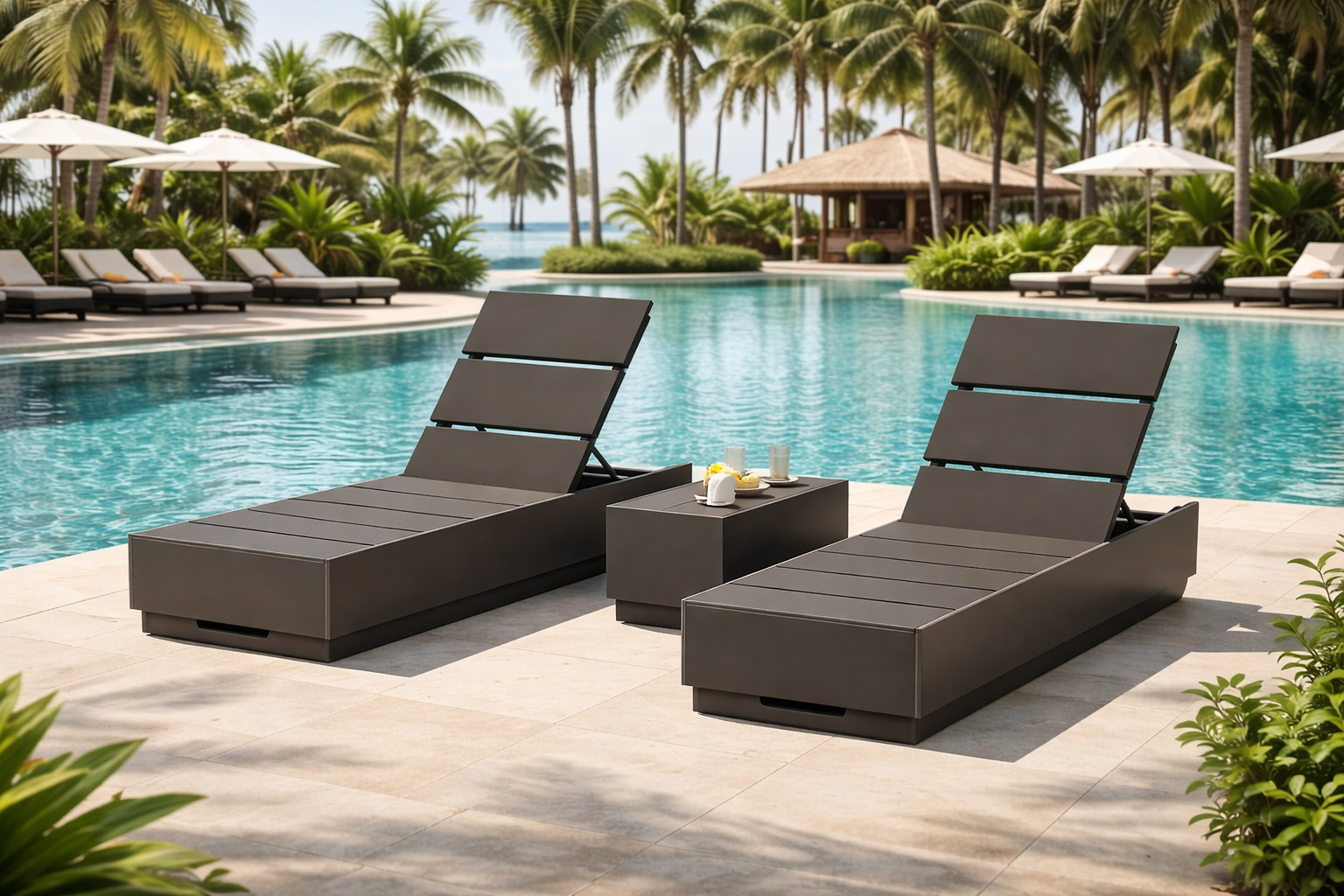
High-density polyethylene, commonly known as HDPE, has become one of the fastest-growing materials in outdoor furniture design. HDPE is a durable, eco-friendly plastic often made from recycled materials like milk jugs and detergent bottles, giving those materials a second life in outdoor furniture.
Unlike traditional plastic furniture, HDPE is engineered for outdoor performance. It is:
Resistant to moisture and mildew
UV stabilized to help prevent fading
Durable enough to resist cracking or splintering
Extremely low maintenance
Many HDPE pieces are designed to mimic the look of painted wood while offering significantly greater durability in outdoor conditions. For coastal properties, HDPE has become a go-to material for many STR owners and oceanfront property managers. It holds up well against salt air, moisture, and constant guest use, which makes it a smart choice for vacation rentals that need furniture that lasts.
Because of its clean lines and solid construction, HDPE mixes beautifully with other outdoor materials such as teak, aluminum, and concrete.
Raving About Rope
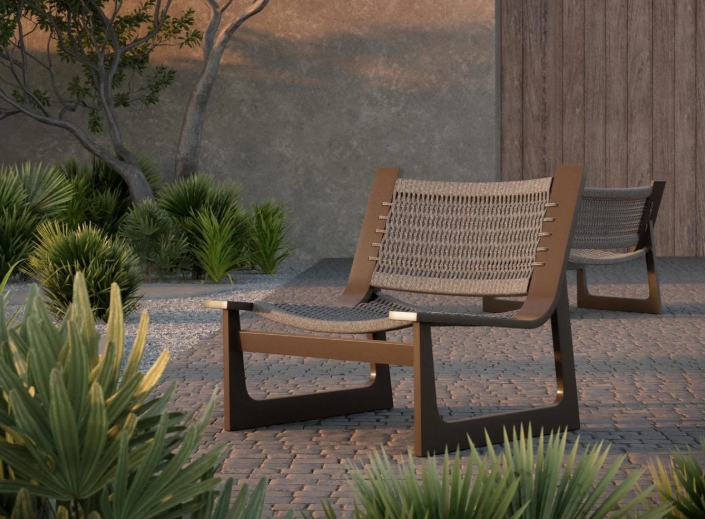
All-weather rope has quickly become one of the most popular materials in outdoor furniture design. It brings the relaxed texture of woven materials while maintaining a clean, modern look that works beautifully in many outdoor settings.
Outdoor rope furniture is typically made with synthetic fibers like polypropylene or polyester, which are specifically engineered to withstand outdoor conditions. These materials are resistant to moisture, mildew, and UV fading, making them a durable option for patios, decks, and poolside seating.
In many designs, the rope is woven or hand-knotted around a powder-coated aluminum frame, creating lightweight pieces that still feel sturdy and supportive. The woven patterns also add visual texture without making the furniture feel heavy or bulky.
Designers love rope furniture because it introduces soft texture and pattern while still feeling sleek and contemporary. It works especially well in coastal, modern, and transitional outdoor spaces.
All-weather rope also mixes beautifully with other outdoor materials. For example:
Rope dining chairs paired with a teak table
Rope bar stools with aluminum outdoor kitchens
Rope lounge seating with concrete or stone tables
Rope accent chairs combined with wicker or HDPE pieces
Because it adds texture while keeping a light, airy appearance, rope furniture is an easy way to bring another layer of interest into a mixed-material outdoor design.
Mixing and Matching Outdoor Materials
Now that we’ve explored several outdoor furniture materials, the real magic happens when they’re combined. Mixing materials creates contrast and balance that makes an outdoor space feel professionally designed. Designers use the same principle outdoors that we use when layering patterns and textures inside the home — variety creates depth. If you’re curious about that concept indoors, you can read more in our guide The Art of Mixing Patterns.
Layering materials allows each piece to bring something different to the space — whether it’s warmth, texture, or structure.
Outdoor Furniture Material Mistakes to Avoid
1. Buying a Full Matching Patio Set
Matching sets can make outdoor spaces feel flat and catalog-like. Mixing materials creates the layered look designers use. If you want a matching sofa & loveseat, change things up with your club chairs or coffee table.
2. Adding Too Many Materials Without Creating Repetition
Limit your space to 2–3 main materials (for example teak, aluminum, and wicker) so the patio feels cohesive. We love mixing, but make sure each of the main materials occur more than once. If your dining table is powder coated aluminum, maybe the frame of your loveseat is as well.
3. Ignoring Undertones
Warm woods like teak pair best with warm metals and woven materials. Mixing warm and cool finishes can make the space feel disconnected. Cool grays make teak look orange and the gray look flat and cold.
4.Forgetting About Texture
Even neutral patios need variation. Combine smooth surfaces like metal or concrete with textured materials like wicker or rope.
5.Using the Same Material Everywhere
If every piece is the same material, the patio will feel one-dimensional. We all love a good set of outdoor furniture from Costco, but branch out a bit and change things up, otherwise your patio will look like a store display (and not in a good way).
Designer Tip: Think in Layers
A well-designed outdoor space often includes at least three design layers:
Structure: aluminum or concrete
Warmth: teak or natural wood
Texture: wicker or woven materials
Combining these elements creates an outdoor environment that feels balanced, comfortable, and visually interesting.
Final Thoughts
Designing a beautiful outdoor space isn’t about choosing one perfect material. Instead, the most inviting patios and outdoor seating areas mix materials to create a layered, natural look. By combining materials like aluminum, wicker, teak, concrete, all weather rope and HDPE, you can create an outdoor setting that feels stylish, balanced, and timeless. The goal is simple: create a space that complements its surroundings and invites people to slow down and enjoy the outdoors.
See something you love?
Many of the outdoor furniture pieces featured in this article come from brands we source through Mickler & Co. Design Studio. If you see something you love and would like help sourcing it for your home, feel free to reach out through our Contact page. We’re happy to help identify pieces or recommend similar options that work for your space.